Showing posts with label dirty swan. Show all posts

Saturday, September 26, 2015

Communist are back!

U.S. Democratic presidential candidate Hillary Clinton proposed on Tuesday a $250 monthly cap on out-of-pocket prescription drug costs and other measures to stop what she called "price gouging" by pharmaceutical companies.
At a campaign stop in Iowa, Clinton rolled out a plan to encourage the development and use of generic drugs and to end pharmaceutical companies' ability to write off consumer-directed advertising as a business expense.
Under Clinton's plan, the monthly cap would limit what insurance companies could ask patients to pay for drugs that treat chronic or serious medical conditions.

http://in.reuters.com/article/2015/09/23/us-usa-election-clinton-idINKCN0RM08D20150923

Friday, July 12, 2013

Targeted failure of the week. Post No 90. Omega-3 fatty acids

I have heard a lot of stories regarding "magic" effects of omega-3 fatty acids and fish oil. And now we have a disaster:

A second large, prospective study by scientists at Fred Hutchinson Cancer Research Center has confirmed the link between high blood concentrations of omega-3 fatty acids and an increased risk of prostate cancer.
Published July 11 in the online edition of the Journal of the National Cancer Institute, the latest findings indicate that high concentrations of EPA, DPA and DHA – the three anti-inflammatory and metabolically related fatty acids derived from fatty fish and fish-oil supplements – are associated with a 71 percent increased risk of high-grade prostate cancer. The study also found a 44 percent increase in the risk of low-grade prostate cancer and an overall 43 percent increase in risk for all prostate cancers.


The increase in risk for high-grade prostate cancer is important because those tumors are more likely to be fatal.

The findings confirm a 2011 study published by the same Fred Hutch scientific team that reported a similar link between high blood concentrations of DHA and a more than doubling of the risk for developing high-grade prostate cancer. The latest study also confirms results from a large European study.


Friday, January 25, 2013

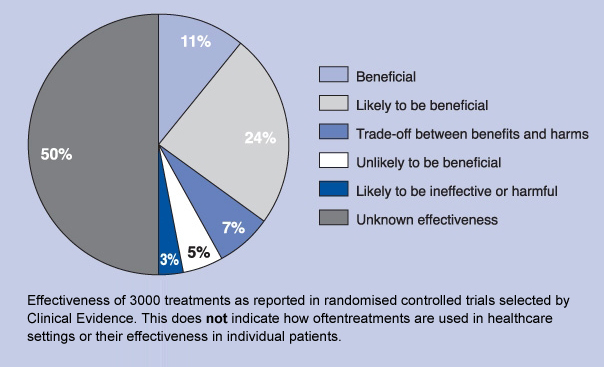
Effectiveness of medical treatments. Surprise?

No, it is not a surprise – it is natural result of the modern paradigm in health care and drug industry.
clinical evidence
 
Keep in mind that the numbers above do not represent how often a given medical treatment is used. Instead, they represent the number of medical treatments in each category.
 
“We want to identify treatments that work and for which the benefits outweigh the harms, especially treatments that may be underused,” the authors note. “We also wish to highlight treatments that do not work or for which harms outweigh benefits.”
 
Those that fall into the “unknown effectiveness” category are medical treatments that “for which there are currently insufficient data or data of inadequate quality.”
 
When health policy wonks talk about ending unnecessary care, they usually mean targeting these types of treatments — the ones where we have no idea whether they’re making us any healthier. but still increase spending.
 

Friday, November 30, 2012

The optimal solid form

From an advertisement:
 
Selection of the optimal solid form is a critical decision in the development lifecycle. It is also an effective means to overcome development challenges and accelerate the development and commercialization of small-molecule drug candidates.

Each solid-state form of an API has unique physicochemical properties that can have a profound impact on bioavailability, stability, and manufacturability. By discovering and characterizing the diversity of solid-state forms, it becomes possible to select an optimal form that displays an appropriate balance of properties that is critical for successful preclinical evaluation and product development, as well as robust manufacturing processes.

The optimal solid form such as crystal-form, salt or cocrystal can:
 
  • Enhance the solubility and bioavailability relative to a crystalline form of the parent molecule
  • Reduce pharmacokinetic variations (dose-to-dose, inter-subject and inter-species)
  • Improve the stability of the API and drug product
  • Increase the robustness of the manufacturing process of the API and drug product, and
  • Accelerate development and commercialization
Which solid form is more suitable for your product?

Wednesday, November 28, 2012

Another magic cure against cancer. Post No 28. Immunotherapy


And again amazing theory – immunotherapy of cancer. The video from 2002. They promised a lot (as usual). Nothing happened so far. Small problems here and there and there are no any panacea on the market! Whom to blame?
 

Saturday, November 24, 2012

The essence of small business

From here:

Это классическая схема "малого бизнеса на понтах":
  1. Нарабатываем репутацию
  2. Конвертируем ее в понты
  3. Конвертируем понты в прибыль

Третья фаза как раз и предполагает продажу дерьма за цену понтового супера.

Sunday, November 18, 2012

Tuesday, November 6, 2012

Another magic cure. From … placenta?

It is not a joke!
From here:
Pluristem Therapeutics Inc. (PSTI) (TASE:PLTR) is a leading developer of placenta-based cell therapies. The Company's patented PLX (PLacental eXpanded) cells are a drug delivery platform that releases a cocktail of therapeutic proteins in response to a host of local and systemic inflammatory and ischemic diseases. PLX cells are grown using the company's proprietary 3D micro-environmental technology and are an "off-the-shelf" product that requires no tissue matching prior to administration. Pluristem is focusing on the development of PLX cells administered locally to potentially treat systemic diseases and potentially obviating the need to use the intravenous route.
It is not enough:
Pluristem Therapeutics, Inc. (PSTI) (TASE:PLTR), a leading developer of placenta-based cell therapies, announced today a milestone in the build-out of its new clinical Good Manufacturing Process (cGMP) manufacturing facility for its Placental eXpanded (PLX) cells in MATAM Park, Haifa, Israel. Pluristem has initiated the Installation Qualification (IQ) validation process through Biopharmax Group Ltd., the company which is handling the build-out of Pluristem's facility.
Once constructed, the new facility will have the capacity to produce commercial grade PLX cells which will complement Pluristem's current manufacturing facility, with over 40,000 square feet. Once constructed, and assuming the PLX cells product candidates are successfully developed and approved by the regulators, the new facility would have the capacity to produce PLX cells for the treatment of over 150,000 patients annually estimated by Pluristem at $1 billion in production value.
Well, the key words here are “and assuming the PLX cells product candidates are successfully developed and approved by the regulators”. Somebody even wrote: “Pluristem Therapeutics is opening the doors to the future of cell therapy being available to the masses as standardized, off-the-shelf personalized medicine”. Well, I think that time will show the value of personalized medicine. So far – only promises and a lot of burned money!

Friday, October 12, 2012

Big diabetes – big pharma’s big bucks!

FierceBiotech has drilled into most of the largest pipelines of Type 2 diabetes drugs in the world, finding that there are more than 100 new therapies for patients with the disease in mid- to late-stage clinical trials, according to data from Relay Technology Management. And drugmakers are aggressively pursuing new treatments for what Standard & Poor's analysts reported last week is an annual market poised to jump from $35 billion now to $58 billion by 2018.
1 AstraZeneca/Bristol-Myers Squibb--Dapagliflozin
2 Johnson & Johnson--Canagliflozin
3 Eli Lilly/Boehringer Ingelheim--LY2605541
4 Merck & Co.--MK-3102
5 Novo Nordisk--Tresiba
6 Sanofi--Lyxumia
7 Takeda--Nesina

Big Pharma in expectation of big backs!

Drugs often fail to live up to blockbuster expectations, of course. Physicians and patients turn out to be less enthusiastic than expected, or another therapy comes along that disrupts everything much faster than anticipated. Drug development is long and hard, and it's not always easy to gauge what the future holds.
1 T-DM1
2 BG-12
3 Darapladib
4 Gantenerumab
5 GS-7977
6 REGN727
7 Odanacatib
8 Anacetrapib
9 Eliquis (apixaban)
10 Tofacitinib
11 Bardoxolone
12 Lu AA21004/vortioxetine
13 QVA149
14 Macitentan
15 Alpharadin

Sunday, October 7, 2012

Tuesday, September 18, 2012

Biosimilars: the zest of the issue

I have obtained an invitation to participate in a webinar "Biosimilars: Nonclinical and Clinical Development Challenges and Considerations"

 
Biosimilars are biologicals and are very attractive approach for Big Pharma in terms of

1. High complexity
2. Low efficiency
3. High price

And organizers of the webinar are aware of the situation:

With many blockbuster biological drugs now, or soon to be off patent, there has been great interest in developing follow-on versions, termed biosimilars. Biosimilars have emerged as one of the fastest growing development opportunities in the biopharmaceutical sector. Unlike generic small molecule drugs creating an exact copy of a therapeutic protein is impossible. As a result regulatory agencies evaluate this category of biologics based on their level of similarity to, rather than the exact replication of the innovator drug.
Do you need any further clarifications? No, just "copy-paste" or "me-too" business!

Monday, September 3, 2012

Regenerative medicine: the future of medicine?

I have received an advertisement about the prospect: “Translational Regenerative Medicine: Market Prospects 2012-2022”. It summarizes the following fields:
• Tissue engineering, organogenesis and organ transplants
• Autologous chondrocyte implantation (ACI)
• Haematopoietic stem cell transplantation and other cellular treatments
• Orthobiologics, biomaterials, neuroprotection and nanotechnology
• Gene therapy, including delivery and viral vectors
• Bone marrow material and human embryonic stem cells
• Mesenchymal stem cell technologies
• Skin regeneration, wound repair, cosmetic uses and treating degenerative disorders
• Treatment of leg ulcers, cartilage, livers, hearts and eyes
Sure, some of these fields are devoted to very small markets; some of the fields are even pseudo-scientific. I have already written about the issue here and here.
The R&D pipeline is strong and promising. Overall world revenue for that market area will reach $1.4bn in 2012, our report forecasts. There will be high demand for treatments, with degenerative diseases, wound healing and other applications stimulating progress.
Sure, the demand for regenerative treatment can be extremely high if regenerative treatment can show its efficiency. So far – so bad! Unsatisfactory. Very far from being satisfactory. And the whole market is $1.4bn in 2012? Is it a joke? One not-very-best blockbuster generates much more revenue!
However I hope that regenerative medicine will be very important in the future. Namely here Big Pharma will create new bubbles to burn its R&D budgets. It will be very hot area – probably not tomorrow but the day after tomorrow. And as usually – nobody knows, a new Black Swan can happen! And I hope for that very much.

Wednesday, August 22, 2012

Cell therapy – let’s blow a new bubble!

As we have already proven the main target of Big Pharma is to profit from different bubbles but not to develop a useful medicinal products. The creature and design of such bubbles is very important issue and it usually takes a decade to complete it. We can name a couple of last successful examples here: personalized medicine and “targeted” medicines. The targeted approach is almost expired (we are somewhere close to "return to "normal"" point, see the picture) and is not “sexy” anymore however personalized medicine is still alive (but not very long, we are exactly on the top - "new paradigm!" point) and successfully consumes tremendous amounts of resources. What will come next? As far as I understand it will be cell therapy (I have written already a little bit about this issue here). The approach of using cell therapy complies with all criteria to be attractive for Big Pharma:
1.       Cell therapy is absolutely ineffective – no new dangerous disease will be cured. The market will be not affected
2.       The manufacturing and development are very expensive – it will be very simple to motivate high prices for R&D and final products
 
I think we are very close to "take-off" point (see the picture). And in press and mass media we have a lot of bogus-articles which just blowing the bubble. One very nice example is here:
 
The regenerative medicine space is a somewhat young industry that presents the possibility of finding a cure for diseases that were previously untreated, or simply managed. The healthcare system consists of an aging population, and with a growing healthcare burden, it seems reasonable that the approval of cell therapies could be a part of our immediate future. Already we are seeing a change in government outlook, as many governments and economies invest millions into the research of cell therapy and regenerative medicine.
For the first time, regenerative medicine is more than skin cream; instead, it has become medical therapies that treat or cure cardiovascular and degenerative diseases (which one and where the results? – Pharmalitet comment). With the number of companies beginning clinical studies for cell therapies, investors should feel optimistic… - Nice language to use “should” instead of “are”!
The cell therapy industry is a more risky investment, yet presents the potential for a large return. At this point, the data proves efficiency for many of the top candidates, therefore, leaving the question regarding approvals and regulator acceptance as the only relevant discussion.  – Exactly! And so far – so bad?
The Tissue Engineering and Regenerative Medicine International Society (TERMIS) is the world's largest professional organization for tissue engineers; and it just recently announced the results from a survey of 37 organizations for public and private sectors. The results showed that government remains highly invested in regenerative medicine, with more than 55% investing over $5 million in the space. In addition to strong government support, both the public and private sectors showed an increase in interest and investments in the space. – Absolutely, this is very direct sign that the bubble is being blown!
And the conclusion is amazing:
As we progress into the next few years, several companies will inch closer to regulatory decisions, and the space itself will be determined by the outcome of candidates such as Baxter's CD34+ cell therapy and the regulatory acceptance of Osiris' Prochymal. It will be an interesting space to watch, but with key developments and progress that continue to shine, it does appear the future is bright for innovating cell therapies.
And everybody seems to be happy! But Big Pharma will be happy in the first place! J

Friday, August 10, 2012

Polypharmacology: targeted approach as a rocket science

Targeted approach has shown its inefficiency in a majority of fields – this is a factum. This paradigm is still very popular due to it is very primitive and mechanistic. It is intuitively understandable for everybody and cannot be simply changed. But how to explain the fact that it should work as if it were correct? Here is an example of an attempt of such an explanation. Just several quotes:

In theory, the large amount of data obtained on drug action, metabolism, safety and efficacy in preclinical studies, as well as in phase I and II clinical trials, should ensure a high success rate in phase III trials. However, many drugs fail at the phase III stage, primarily because of a lack of efficacy (ie, no significant difference between placebo and drug treatment, or between the investigational drug and current treatment alternatives). The risk of failure is higher if the drug has a novel mechanism of action (ie, a newly identified target). This problematic evidence indicates that new approaches are necessary in drug-discovery strategies.

Defining the complex mechanisms underlying diseases is challenging. The viewpoint that diseases can be understood by a Mendelian perspective, or the ‘one gene-one disease’ theory, and treated with a ‘magic–bullet’ therapy, has proven to be unsuccessful. Many diseases are not associated with a single genetic determinant. Instead, a complex multiplicity of genetic determinants leads to a disease state, and a single genetic determinant can influence more than one disease. In addition, environmental factors, tissue type, hormone levels and age play a role in how genetic determinants dictate disease manifestation. This complexity in disease origins arises because the impact on protein function or expression level is controlled by the regulatory network within which a protein exists.

In order to gain a systems-level perspective of disease at the molecular level, a systems view of the relevant physiological function is essential. Each physiological process has an underlying signaling network of chemicals, hormones, protein receptors, ligands, enzymes, transcription factors, ions or DNA/RNA that modulate biochemical reactions, electrical signals, mRNA transcription and protein translation. These reactions can each occur with different kinetics, and simultaneously and/or at different time points, as well as at varying levels of magnitude. Therefore, each physiological function or phenotype is controlled by a complicated network of signals.

Sure, we understand the complexity. But what is the proposal of the author? Guess what? Just to dig even deeper!

Therapeutic polypharmacology includes the concept of treating multigenic, complex diseases by targeting multiple targets with one or more drugs, in order to effectively reset the regulatory network processes that are altered in the disease state. Adverse polypharmacology comprises the scenarios in which the ‘offtarget’ binding of drugs leads to adverse effects. Such interactions include binding to protein targets other than the therapeutic target and binding to the therapeutic target in non-target tissue.

The systematic treatment of a single disease at two or more targets (ie, critical nodes) requires a combination of the empirical knowledge of which drugs are effective against each pathophysiology and the knowledge gained from a systems approach to understanding how multiple nodes cooperate in a signaling network to produce the pathophysiology associated with the disease. Ideally, each disease would be treated by therapeutic polypharmacology – the combination of ‘targeted therapies’ that modulate multiple, specific signaling components or interactions that malfunction in a given disease. The regulatory network surrounding the drug targets and/or disease would be analyzed, accounting for the modulations resulting from the targeted therapy treatment. Combining the building of interaction networks for various diseases with genome-wide analyses of changes, such as SNPs or copy-number variations, will allow a significant expansion of the list of possible drug targets in a physiologically relevant manner. Each gene product associated with disease is not necessarily ‘druggable’; however, an analysis of the druggability of the human genome, according to the structural and functional properties of each protein, supports the view that the current ‘drugome’ can be greatly expanded and diversified.

As I understood if the targeted approach failed we have to replace it to more complicated and therefore sexier more attractive multitargeted polypharmacological approach? Well, it can help to survive the current targeted approach a couple of decades…